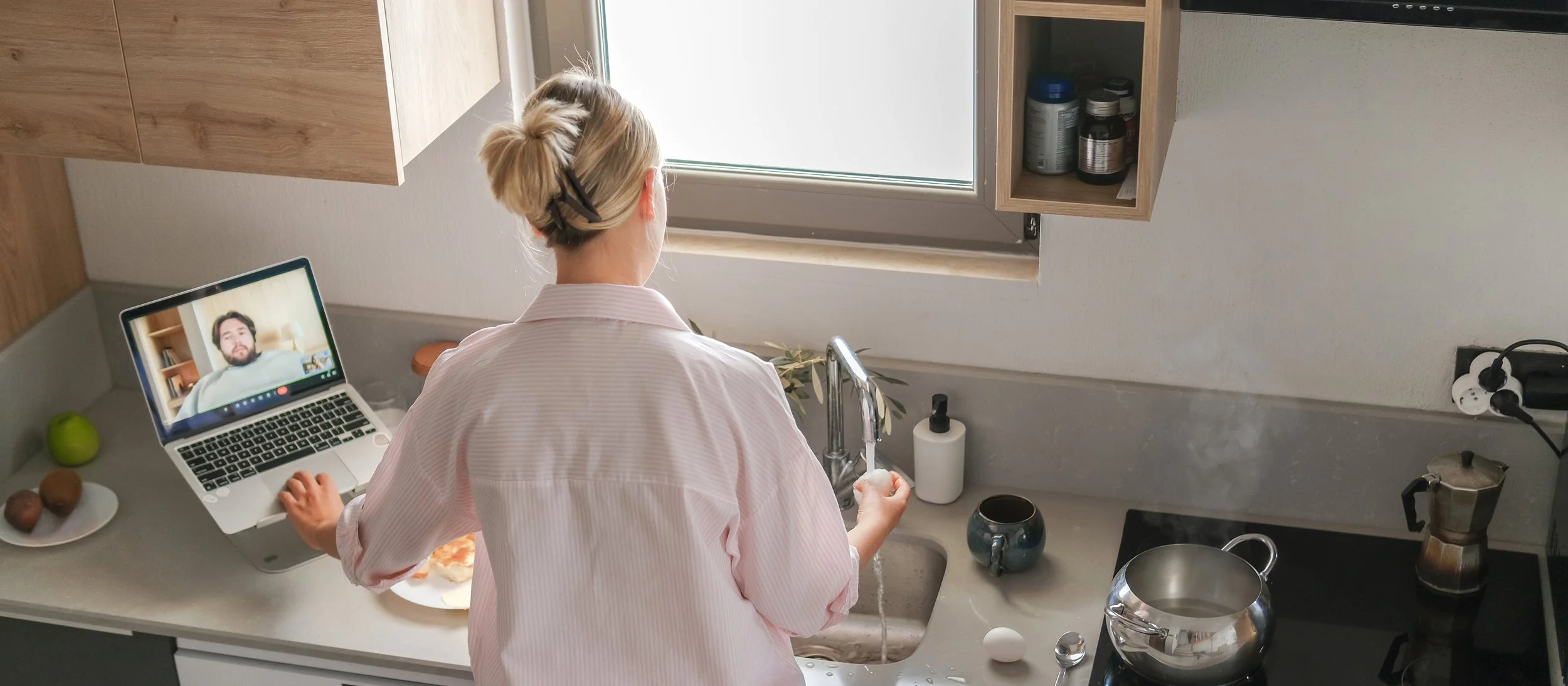
Always On?
Finding a healthier work-life balance in
a digital world
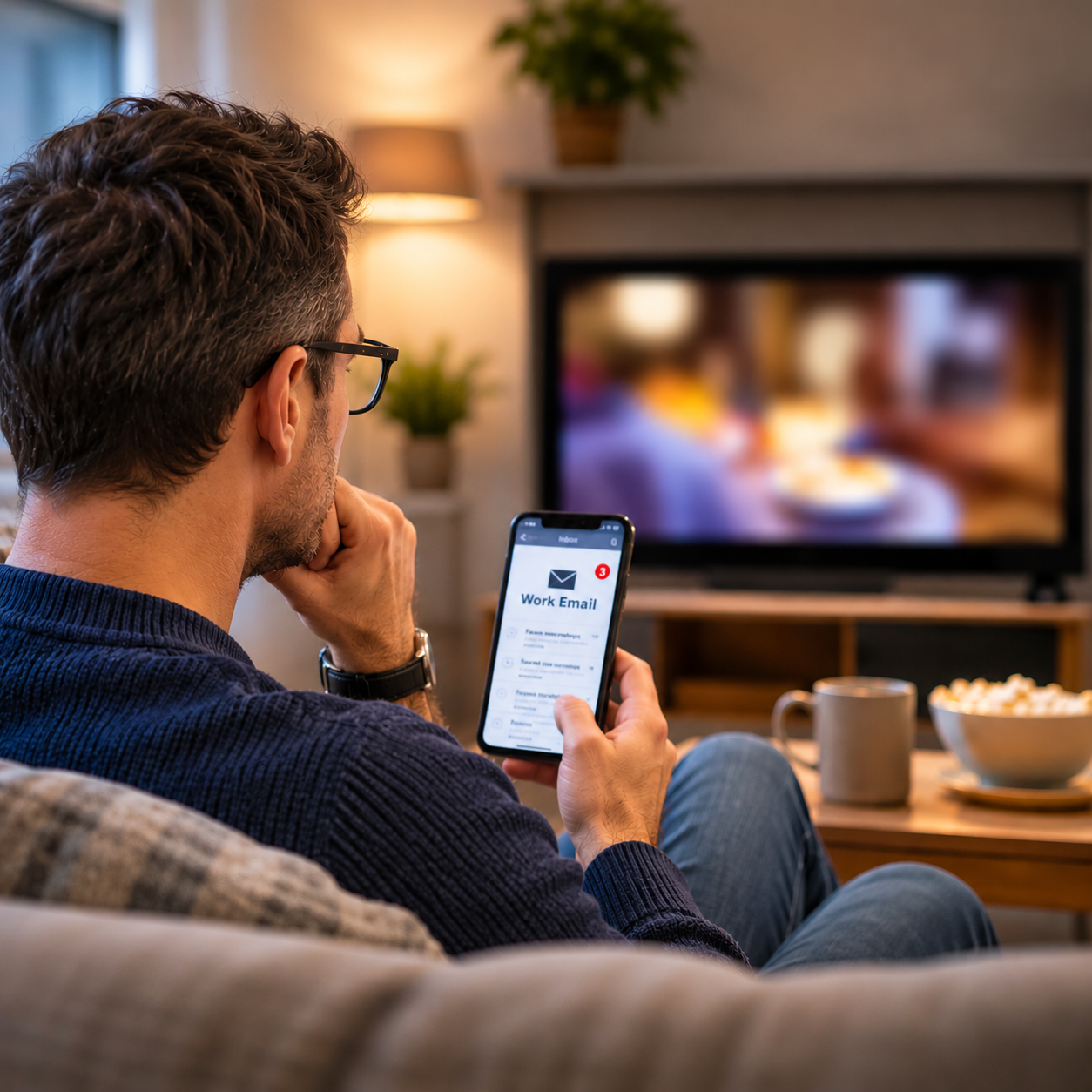
We’ve all been there, checking a work email ‘quickly’ while watching TV. Responding to a message while eating dinner and thinking about the ‘to-do list’ at work tomorrow, when we should be relaxing or enjoying family time.
While technology has transformed the way we work, in many ways for the better, working from home, communicating with colleagues - there is a downside because if work is just a notification away, we can feel we are always ‘on’.
-
Understanding the psychology behind our digital habits can help us to understand why switching off isn’t always easy.
-
Today’s digital workplace looks remarkably different to the traditional 9-5 working day which once existed. Smartphones, laptops, email, WhatsApp groups and video calls have allowed us a great deal of flexibility in our working lives. For some, this has made balancing work and home life easier, while for others it’s created a feeling that you should always be available.
The advantages of technology
Greater flexibility
Many people can work remotely or utilise a hybrid work model. This can be advantageous in cutting down commuting time and managing both personal and work responsibilities.
Greater control
Some digital applications allow employees a greater sense of control over how and when they get work done.
Improved workflow
Modern digital applications can help us be more efficient during our workday. We can perform some automated tasks which would otherwise be time-consuming. We can get instant feedback from colleagues, and it is much easier to collaborate on projects where there are multiple contributors.
How does the research back this up?
Allen et al., (2015) highlight the benefits of remote working, including those mentioned above, while acknowledging the difficulties in setting work-life boundaries.
The problem with being ‘always on’
So you finish work at 5pm, it’s been a long day and you’re finally at home relaxing when your phone pings with a message from a work colleague. You tell yourself, I’ll take a quick look, it will only take a minute.
You reply and then remember something else you have to do tomorrow or you find yourself replying to more emails and suddenly you’re thinking about work again. Sound familiar?
Overtime this can contribute to a thing called ‘techno-stress’.

-
Techno-stress isn’t a new phenomenon. It was first defined by psychologist Craig Brod in 1984, as a ‘modern disease of adaptation’.
Essentially, it refers to stress associated with adapting to new technology.
So it’s easy to see how this might happen.
For example we might experience pressure from;
Constant digital notifications i.e. messages, emails
Communication in large volumes which can be hard to keep up with
The pressure to keep up with emerging technologies. (Tarafdar et al., 2007)
Feeling that work is creeping into our personal time
The pressure to respond outside of working hours.
-
Have you ever received a work message and felt the pressure to reply immediately?
That feeling is known as telepressure.
Barber and Santuzzi (2015) describe telepressure as the psychological pressure to respond quickly to digital communications.
Sometimes the pressure comes from workplace expectations, othertimes it is the pressure we put on ourselves.
The problem with feeling constantly available is that we can find it hard to relax and it can even disrupt our sleep patterns.
-
You might think shutting down our computer or putting our phone away might help but unfortunately our minds don’t work that way.
Two psychological theories can explain why;
Boundary Theory
Ashforth et al,. (2000) noted; It can be difficult to manage boundaries when it comes to transitioning between different roles, such as professional and home life.
Psychological detachment
This is about being able to switch off mentally during our personal time.
Sonnentag and Fritz (2015) highlight the importance of ‘detaching’ from work, to recover from work-related stress.
Five tips for better digital balance

Set a work ‘Sunset’
Set a time to stop checking work notifications like emails and texts unless your role genuinely requires you to be available. This helps put an end/sunset to the workday psychologically.
Create an
end-of-day routine
Make time for a walk. Changing into different non-work clothes or closing the door to your home office can signal the end of your workday and the beginning of relaxation time.
Please note; These suggestions are informed by psychological research but have not been individually tested.
Write tomorrows to do list before you finish for the day
Before you finish the work day, take a few minutes to look at the things you have accomplished that day and write down what needs your attention tomorrow.
Smit (2016), suggests that planning unfinished work can aide with psychological detachment.
Manage your notifications
Consider muting non-essential work notifications outside of normal working hours to avoid interruptions during personal time. If possible having a separate dedicated work digital device (phone/laptop) which you can put away in personal time might be beneficial. Of course this might not be practical for everybody, but even small changes to your notification settings could reduce interruptions.
Set clear boundaries
Sometimes we assume that we are expected to be available to colleagues all the time, even when that might never have been discussed. It might be worth having the conversation with your manager or colleagues. For example having an automatic email responder message outside of normal work hours that explains that you don’t check your email outside work hours but will get back to them on the next working day could be beneficial for mental rest and to emphasise your work life boundaries.
Quiz
The digital dilemma,
what would you do?
It's 9 pm, you’re relaxing on the sofa, watching your favourite programme when, out of the corner of your eye, you spot your phone light up. It’s your manager: ‘Hi, could you take a quick look at this by tomorrow?’. What do you do?
-
This could be a sign of workplace telepressure particularly if you feel uncomfortable leaving the message unanswered.
-
Ok, but now you’re thinking about work and without even replying this can interfere with psychological detachment making it hard to switch off from work in personal time.
-
Your personal time matters too. Waiting until tomorrow can help maintain boundaries between work and home life and can help establish realistic expectations as to when you’re available.
It’s worth asking ourselves whether we actually need to respond immediately or whether we have become used to feeling that we should.
Being able to switch off from work is important for our wellbeing, and creating clearer boundaries can help us make more time for the things we enjoy outside of work.